Concrete floors are widely used in garages, commercial facilities, workshops, and outdoor living spaces because of their strength and versatility. However, untreated concrete can become stained, dusty, discolored, and vulnerable to everyday wear. Applying a suitable protective finish helps preserve the surface while improving its appearance. UV cured concrete floor finishes offer a modern approach to concrete protection by using ultraviolet light to harden specially formulated coatings in a short amount of time.
For property owners considering an upgrade, understanding how this technology works can help guide the selection process. Companies such as Superior Garage Flooring provide concrete coating solutions that include UV-cure topcoats for projects where faster turnaround and durable surface protection are priorities.
What Are UV Cured Concrete Floor Finishes?
UV-cured concrete finishes are specialized coating systems that harden when exposed to ultraviolet light. Unlike conventional coatings that depend primarily on evaporation or chemical reactions to cure, UV-curable materials use photoinitiators that respond to specific wavelengths of UV energy.
When the coating receives sufficient ultraviolet exposure, these photoinitiators initiate a chemical reaction called polymerization. This process converts reactive components into a solid polymer network, creating a hardened protective layer over the concrete.
The technology offers several practical advantages:
- Rapid curing: UV exposure can harden compatible coatings within a short period.
- Surface protection: The finished layer helps resist everyday abrasion, stains, and other forms of wear.
- Reduced downtime: Faster curing can allow certain spaces to return to service sooner.
- Consistent finishing: Controlled UV exposure supports a more predictable curing process when application conditions are appropriate.
However, actual performance depends on the coating formulation, surface preparation, application thickness, and curing equipment.
Key Benefits of UV Cured Concrete Floor Finishes
1. Faster Curing and Shorter Downtime
One of the main advantages of UV-cured coatings is their rapid hardening process. Traditional concrete coating systems may require extended curing periods before they can handle foot traffic or vehicle loads.
UV technology can significantly reduce this waiting period for compatible products. This can be particularly useful in garages, retail spaces, workshops, and commercial environments where keeping the floor unavailable for several days may disrupt normal activities.
It is important to distinguish between surface curing and complete project readiness. Concrete preparation, coating application, and any additional layers still require adequate time. Manufacturers’ instructions should determine when the finished floor can safely accept traffic.
2. Improved Resistance to Everyday Wear
Concrete floors experience repeated contact with footwear, vehicle tires, tools, equipment, and stored materials. Without suitable protection, these activities can contribute to surface deterioration and make maintenance more difficult.
A properly selected UV-cured coating creates a protective layer that helps reduce direct exposure to everyday abrasion and staining agents. Depending on the formulation, it may also provide resistance to common household chemicals and cleaning products.
For garages and workshops, this protection can help maintain a cleaner, more presentable surface. However, resistance levels vary between products, so property owners should evaluate technical specifications rather than assume every UV coating offers identical performance.
3. Better Appearance and Surface Clarity
A concrete floor finish influences more than durability. It also affects how a room looks and how easily the surface can be maintained.
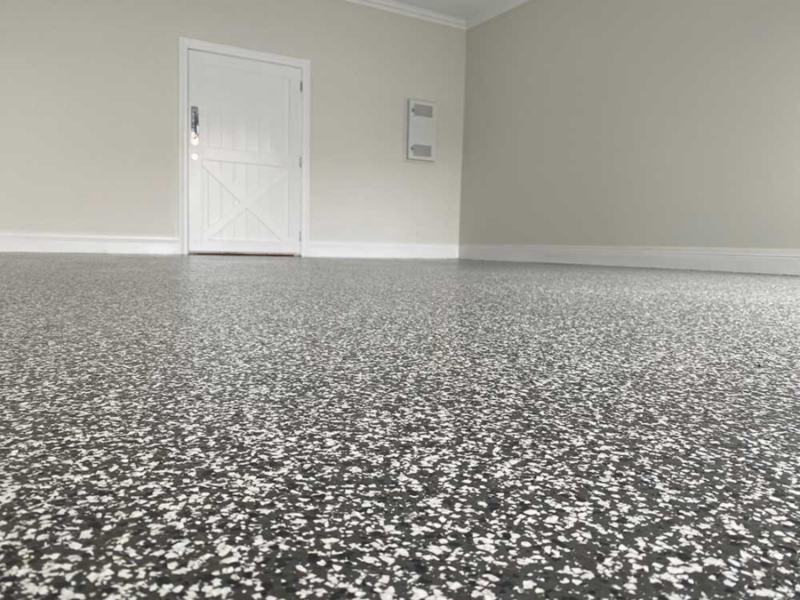
UV-cured clear coats can provide a smooth, attractive finish that complements decorative concrete systems. When applied over compatible colored coatings or decorative flakes, a transparent protective layer can preserve the underlying design while adding a finished appearance.
Available finishes may include different gloss levels, depending on the product. This flexibility allows property owners to consider both functional requirements and visual preferences when planning a flooring project.
4. Potential Benefits for Indoor Air Quality During Installation
Some UV-curable coating formulations are designed with low volatile organic compound (VOC) content. Because the curing process uses ultraviolet energy rather than relying entirely on solvent evaporation, certain products can reduce emissions associated with conventional coating systems.
However, UV curing does not automatically mean a product is VOC-free or completely odorless. Formulations differ, and uncured materials may still require appropriate ventilation, protective equipment, and professional handling.
Checking the product’s safety data sheet and technical documentation is essential before selecting a coating for an enclosed space.
Where Are UV-Curable Concrete Coatings Used?
UV-curable finishes can serve different applications where fast curing and surface protection are important. Their suitability depends on the specific formulation and the conditions of the installation.
Common applications include:
- Residential garages: A UV-cured topcoat can protect compatible decorative flooring systems from routine vehicle and household activity.
- Commercial facilities: Certain retail and business environments may benefit from shorter flooring downtime during renovation projects.
- Workshops: Protective coatings can help maintain surfaces exposed to tools, equipment, and everyday spills.
- Industrial settings: Specialized formulations may be suitable for selected facilities that require controlled curing and specific performance characteristics.
- Concrete restoration projects: Compatible UV finishes can serve as a protective final layer over properly prepared and repaired concrete.
For outdoor applications, UV stability, moisture exposure, temperature changes, and slip resistance should receive particular attention. Not every UV-cured product is designed for exterior use.
What to Consider Before Choosing a UV-Cured Floor Finish
Selecting a coating requires more than comparing curing speeds. Several factors influence whether a particular system will perform as expected.
Concrete Surface Preparation
Proper preparation is essential for coating adhesion. Dust, grease, oil, moisture, and existing contaminants can interfere with bonding and contribute to premature coating failure.
Depending on the condition of the concrete, preparation may involve:
- Removing dirt, grease, and existing surface contaminants.
- Grinding or mechanically profiling the concrete.
- Repairing cracks, chips, and damaged areas.
- Testing moisture conditions when required.
- Removing remaining dust before applying the coating.
The substrate must meet the coating manufacturer’s requirements before installation begins.
Compatibility With Existing Coatings
UV-cured finishes are not automatically compatible with every concrete coating. Applying them over an unsuitable epoxy, sealant, or decorative layer may result in poor adhesion or an inconsistent finish.
Before installation, confirm that the UV topcoat is approved for the existing substrate and any underlying coating layers. A professional assessment can help identify compatibility concerns.
UV Equipment and Application Requirements
UV curing requires appropriate equipment that delivers the correct wavelength and intensity of ultraviolet energy. Factors such as coating thickness, exposure time, equipment movement, and surface geometry can influence curing quality.
Areas that receive insufficient UV exposure may remain partially uncured. Professional installation helps ensure the equipment and application process match the product’s technical requirements.
Maintenance and Long-Term Performance
Even durable floor finishes require routine care. Regular sweeping, prompt spill cleanup, and cleaning with manufacturer-approved products help maintain the coating’s appearance.
Property owners should also avoid using harsh chemicals or abrasive cleaning equipment unless the manufacturer confirms they are suitable. Periodic inspections can identify scratches, worn areas, or localized damage before these issues become more extensive.
UV-Cured Finishes vs. Traditional Concrete Coatings
Both UV-cured and conventional concrete coatings can provide useful surface protection, but their curing methods differ.
Traditional epoxy coatings generally cure through a chemical reaction between resin and hardener. Polyaspartic coatings also rely on chemical reactions and are known for relatively fast curing and UV stability, depending on the formulation.
UV-curable coatings use ultraviolet energy to initiate polymerization. This provides a different approach to curing and can offer very short processing times under controlled conditions.
The right option depends on the property’s intended use, concrete condition, environmental exposure, installation requirements, and available budget. Faster curing alone does not necessarily make one system better than another.
Make an Informed Decision About Your Concrete Flooring
Choosing a concrete floor finish involves balancing appearance, durability, maintenance, and installation time. UV cured concrete floor finishes offer an effective option for projects where rapid hardening and reliable surface protection are important. However, their success depends on proper preparation, compatible materials, suitable UV equipment, and careful application.
Before committing to a flooring system, review the manufacturer’s specifications and consider the demands the finished surface will face. Superior Garage Flooring can help property owners evaluate suitable concrete flooring solutions based on their space, performance requirements, and desired finish.